More than 100 years ago, the United States of America was the final destination of numerous Slovaks emigrating overseas. Later, when the World got divided into the "bad and decadent West" and the "friendly Soviet Union", everything originating in the U.S. symbolized regression or admiration of the wicked and corrupt capitalism. Half a century ago, hardly anyone would have predicted that American companies would like to come to Slovakia to pursue their business here. Yet, 25 years after the fall of the Berlin-Wall, the United States is now Slovakia’s significant political as well as economic ally. Since 1993, the economic interests and values of the U.S. have been represented in Slovakia by the American Chamber of Commerce. Its Slovak and international member companies currently even outnumber purely American firms. Together they form the strongest voice of Slovak business. Where are the footprints of AmCham, what is its mission and when will it be accomplished?
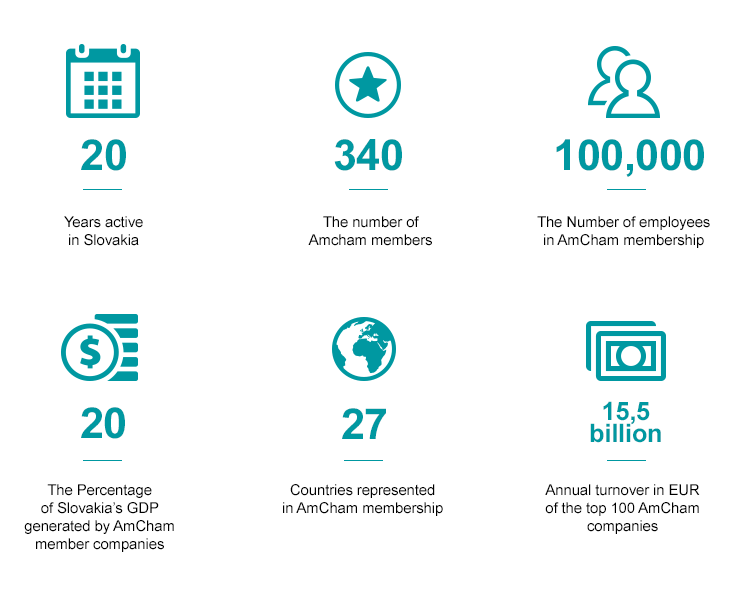
The AmCham conference room on Bratislava's square Hodžovo námestie offers a direct view of the residence of the country's supreme constitutional representative. Not so long ago, the Slovak President visited the U.S., striving to strengthen the mutual economic relations between both countries. Symbols pointing at the alliance of both countries can be found in virtually all larger towns in Slovakia. Even –in what seem to be forgotten places, it is highly probable that the people over there work at companies directly or indirectly related to a U.S. based company. Most of those companies are members of the American Chamber of Commerce in Slovakia. In 2014, AmCham has more than 340 members, 35% of whom are U.S. companies, 25% Slovak and 40% multinational corporations. These companies represent approximately 100,000 jobs and 20% of the Slovakia’s GDP. In order to ensure more jobs and increasing living standards, Slovakia needs prospering companies and these in turn need a healthy business environment. The mission of the American Chamber of Commerce in Slovakia is the improvement of this business environment. The 20 years of AmCham’s presence in Slovakia have brought numerous positive results so far, which proves that AmCham is pursuing its mission well, but also that its mission is not done yet!
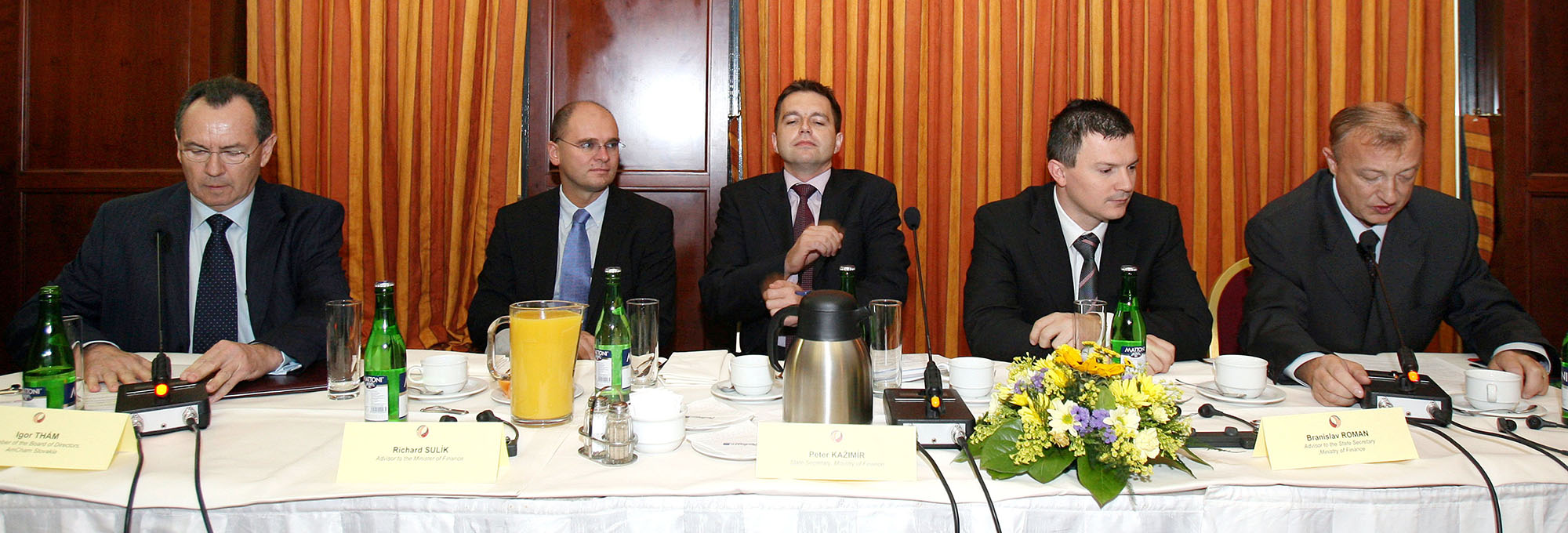
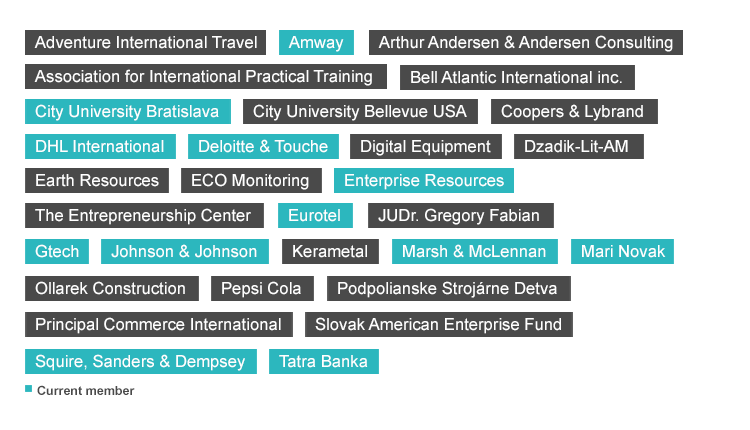
The official kick-off date when the American Chamber of Commerce was founded is October 27, 1993. Slovakia was the World's youngest democracy, and only a handful of American companies did business here. There was a feel of "curiosity" from investors abroad who were considering their entrée to the Slovak market. “AmCham was a vehicle for American-based companies to be involved in a newly emerging country that little was known about as Slovakia had been part of the Soviet Bloc and not engaged in international business or our social norms,“ remembers Patrick Uram, the Chamber's Executive Director between 1996 and 1998. At the time of its foundation, the Chamber had 31 members.
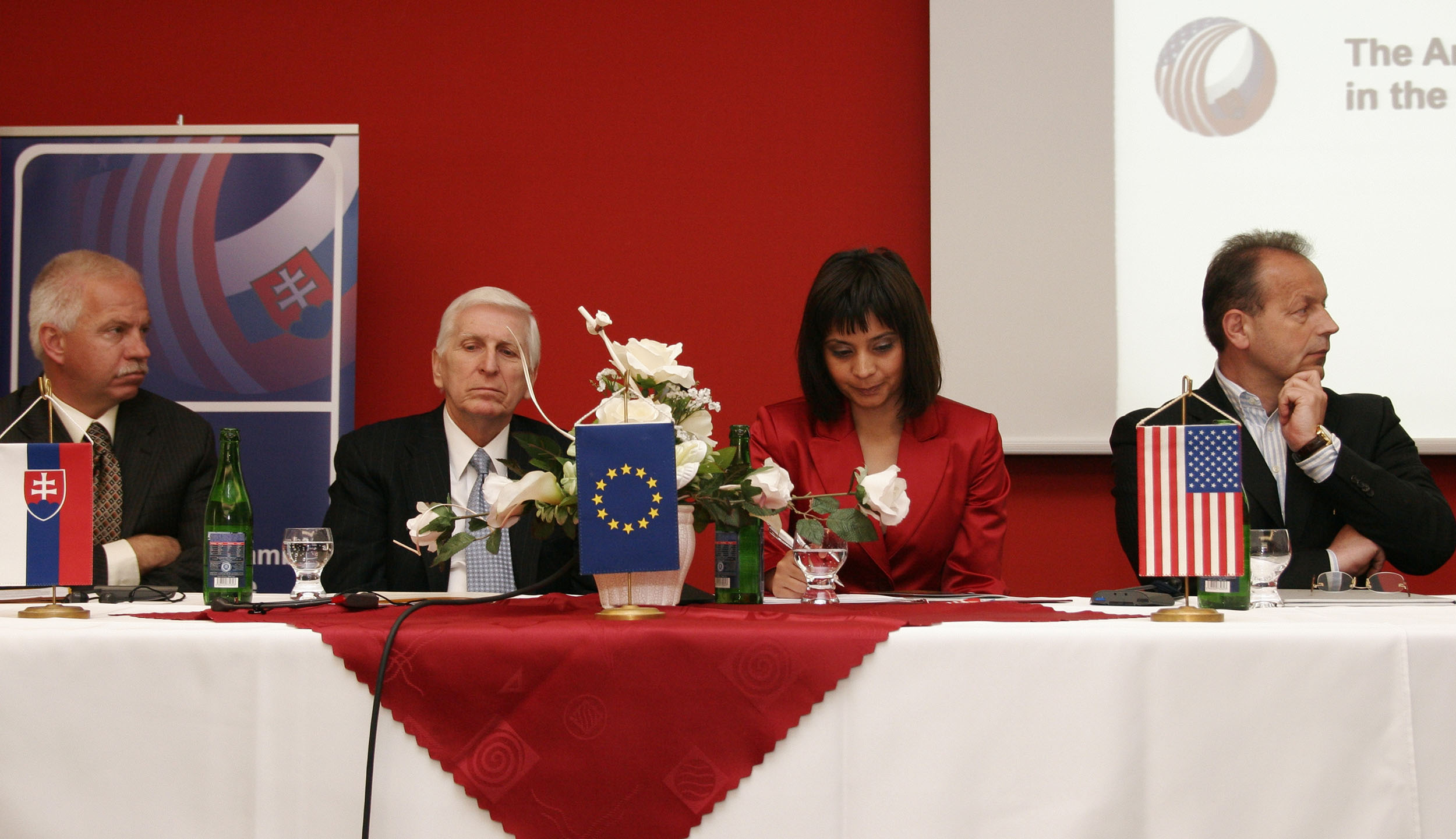
Mari Novak
Former President of AmCham Slovakia
Igor Kottman
President of AmCham Slovakia
With euphoria about this newly founded state came also the first significant economic decisions. The Slovak Republic – as one of the successor-states of the former Czechoslovakia – took over assets worth billions of crowns, including entire companies and plants, many of which did not manage to generate a profit and find customers even four years after changing over to a market economy. The government, headed by Prime Minister Vladimír Mečiar, wanted to solve this problem by selling some part of these state-owned assets. Especially, the second privatization wave was of major significance. Foreign investors, however, could not fully participate in it, since this was simply not possible under the applicable legislation of that time.
Nevertheless, the country's GDP saw growth for the first time since 1989 (based especially on the export of semi-finished products). However, small and medium-sized enterprises were increasingly under pressure and disadvantaged in comparison to the privatized companies. Corporate taxes remained high and companies had to submit 40 percent of their gross profit to the state. Some of them could apply for a so-called “tax holiday” lasting 5 to 10 years. While foreign investors were interested in this exception, at the same time, they fine-tuned their investments in order to be ready for moving away from Slovakia after the "holiday"- benefit expired. Fortunately, the “doomsday scenario” did not materialize and it was also thanks to AmCham that many companies decided to stay. At that time, AmCham openly declared its policy of maintaining a constructive dialog with any government in power, while it also strived to convince companies to look at Slovakia from a longer term perspective. As a result, AmCham became a respected voice during this period, especially by foreign companies with overseas participation. The chamber created the necessary channels for a systematic discussion with the government.
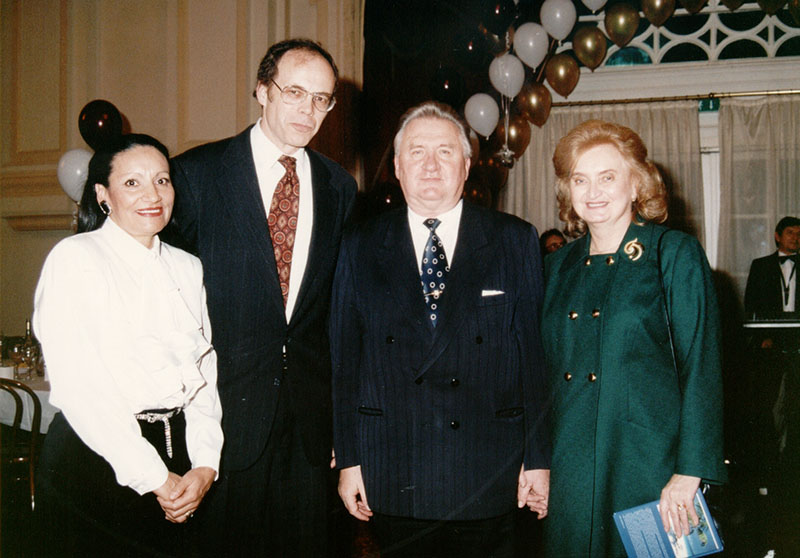
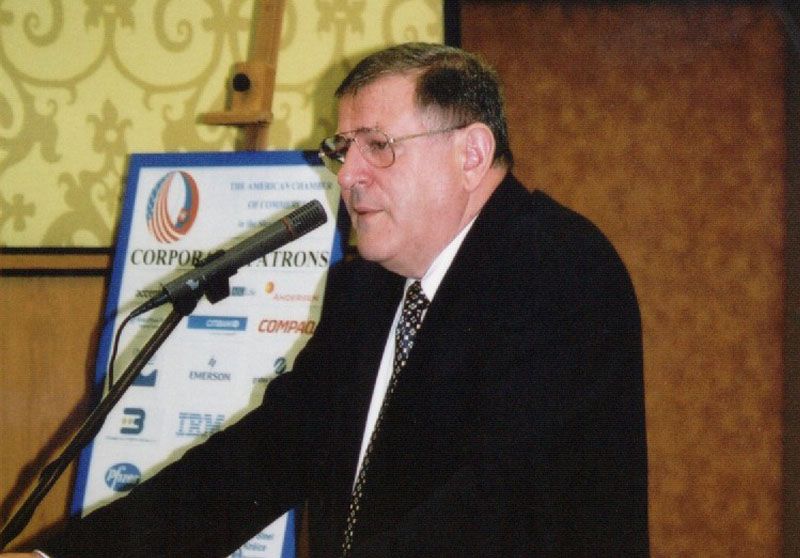
”AmCham and the Slovak Republic grew up together. As the Slovak Republic was hard at work on setting up its infrastructure to do business as a country at the heart of Europe, so too was the American Chamber of Commerce hard at work on setting up its infrastructure,” said Beverly Douglas, AmCham's Executive Director from 1993 to 1996.
AmCham and foreign investments in Slovakia |
|---|
|
The year 1998 marked a real turning point for Slovakia and its business environment. The change of the government made it possible for the country to become a member of NATO in March 2004, and the European Union two months later. “The results of their reforms and the very business-like approach brought many changes to the Slovak business environment. The tax reform, the Labor Code reform, along with many other reforms resulted in Slovakia becoming the destination of choice for many foreign investors at the end of 1990s. AmCham played an important role in supporting those reforms, often at the request of the government, which, as we saw these reforms as positive for the business environment and therefore supportive of our members, we were eager to do,” said Jake Slegers, who heads AmCham as Executive Director since 2000.
The government of Prime Minister Mikuláš Dzurinda launched several strategic reforms, prepared by the ministries, who were also joined by experts from the American Chamber of Commerce. This gave rise, e.g., to the Strategy for the Development of Slovakia's Competitiveness until 2010 (Stratégia rozvoja konkurencieschopnosti Slovenska do roku 2010) or the Minerva initiative, which also aimed to support the creation of a knowledge-based economy. As part of the Milénium project, schools and other educational institutions were decentralized and placed under the control of local self-governments. In order to help university graduates to enter the job market, AmCham’s Job Fair was launched, first organized in 1999. The influx of new foreign investments and the growing employment rate were also supported by the amended Labor Code, introducing a 40-hour week and flexible employment forms. AmCham was also behind these changes. Perhaps one of the most significant changes (at least with regards to the impact on the business environment), was the 19% flat tax, which became effective in January 1, 2004.
AmCham and taxes |
|---|
|
The 2006 change to a new left-wing government was accompanied by the celebration of Slovakia's accession to the Schengen zone. Three years later, the country finally consummated its EU project through its adoption of the common currency.
During those years, the American Chamber of Commerce focused on three major fields. The first one was the setting of the new tax policy and investment incentives. AmCham responded to the amendments of the acts on the income tax and VATby activating its tax committee. Its members conducted extensive talks with the representatives of the Finance Ministry, focusing mainly on the taxation of stock options.
The discussions on the new rules for purchasing goods and services were equally intensive. AmCham formed a special task force that negotiated with the Finance Ministry as well as the Public Procurement Office (Úrad pre verejné obstarávanie). Since then, the issue of public procurement has become a stable item on AmCham's agenda, continuously discussed with the government. The task force strives to influence legislation so that public procurement processes become more efficient and more transparent. While in 2010 the government and the public dealt with the global economic crisis which led to mass layoffs in larger companies, a special survey conducted by the American Chamber of Commerce revealed that there are also other, perhaps even more sensitive, spots of Slovakia's economy and job policy: small and medium-sized enterprises.
While in 2010, the government and the public dealt with the announced mass-layoffs in larger companies in response to the global economic crisis, a special survey conducted by the American Chamber of Commerce revealed that there are other and more sensitive spots of Slovakia's economy and job policy - i.e. small and medium-sized enterprises.
AmCham and small and medium-sized enterprises (SMEs) |
|---|
|
In the years when the social democrat government was replaced by the right-wing cabinet of the Prime Minister Iveta Radičová, the economic crisis hit the entire Euro-zone. AmCham members quickly understood that, during these difficult times, it is necessary to even double the efforts in acquiring new investors, potential customers as well as suppliers, and employers. Thus, the main topic of the year 2011 was foreign direct investments (FDI). AmCham experts founded the FDI Committee, which formulated 10 steps for attracting even more investments to Slovakia and for turning Slovakia into the number one destination for foreign investors by the year 2020. FDI has also been discussed in a regional context through the annual Košice Invest conference. AmCham’s office in Košice, opened in 2003, has been instrumental in attracting investment into the region of Eastern Slovakia. Since Radičová's government fell in October 2011, AmCham decided to discuss the future of FDI in Slovakia not only with the executive branch, but also with the entire political spectrum. One of the key priorities that have emerged from these discussions and AmCham’s recommendations was education.
The quality of the education system profoundly affects the country's economic performance, as well as its business environment. While the new government replacing Radičová's cabinet tackled this issue only marginally, the American Chamber of Commerce dedicated the entire year 2012 to education. 2012 was AmCham’s “Year of Education.”
This issue was definitely neither new nor unknown to AmCham. At the time when Ján Mikolaj had still been Education Minister, a new AmCham committee was established in 2007, focusing on the Ministry's plans for restarting the entire education system. The task of the Business-Academic Committee was to ensure that the changes led to a better interconnection between universities and the needs of the companies, thus helping to cut the double-digit unemployment rate
In 2012, Amcham organized a series of events bringing together politicians, academics, experts and entrepreneurs. All of these stakeholders jointly looked for a solution helping the Slovak education system to change from the current "unemployed-graduate mill" to a "human capital production line" for the Slovak economy.
AmCham and education |
|---|
|
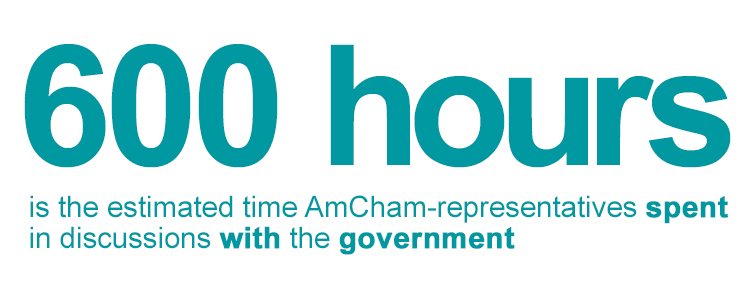
The government that took over in 2012 decided to open topics that were crucial for the functioning of companies. New rules were established in the social/labor field. AmCham activated its committees, as well as task forces. In the process of compiling proposals, the Chamber was a constructive discussion partner with the government. Its position grew even stronger after acquiring seats in the Council of Solidarity and Development of the Slovak Republic (Rada solidarity a rozvoja SR) and in the Legislation Council of the Government (Legislatívna rada vlády). “We have reached a certain unprecedented level in interaction with the Slovak government. In the last few years, AmCham has become very much a partner of choice for several ministries,” says Jake Slegers, the Executive Director of the American Chamber of Commerce.
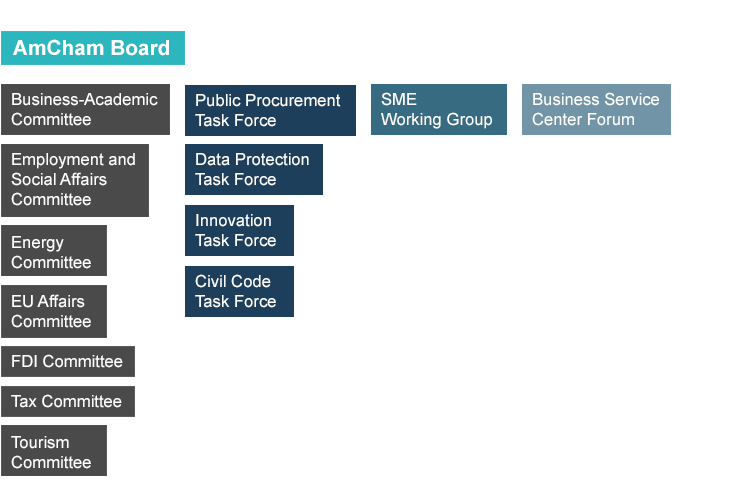
A real challenge for the American Chamber of Commerce was also the amendment of the Labor Code in 2012. The Labor Code is and always was a real "pain-point" in the relationship between the government and business. Even at this time, AmCham managed to take a constructive stand: “We always listen closely to the issues and topics which are crucial for our member companies at any given time and do our best to reflect these in our activities and events,” Jake Slegers said. Similar to the preceding Labor Code amendments, also in this case AmCham advocated the same principles during the negotiations: The Labor Code should be modern, flexible and supportive rather than an "employment brake".
AmCham and the Labor Code |
|---|
|
The findings of independently conducted research as well as feedback from the business community convey a clear message. Even today, entrepreneurs are worried about corruption, the condition of the judiciary and the non-transparent adoption of laws.
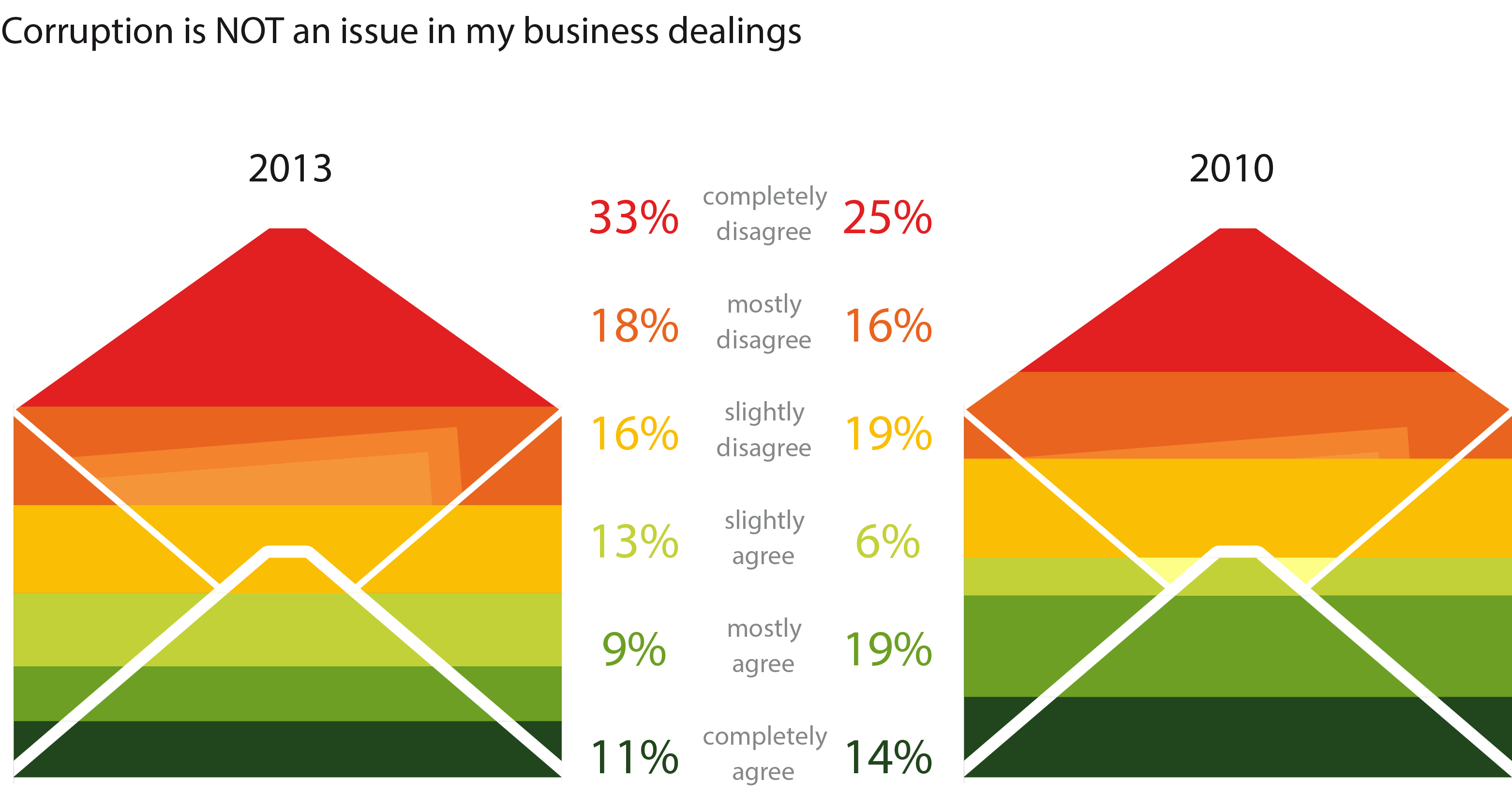
Surveys made among small and medium-sized enterprises in 2010 as well as in 2013 (AmCham SME Survey) even indicate that the perception of these issues is getting worse.
Survey outcomes revealed that 67% of SMEs view corruption as a significant problem affecting the business environment in Slovakia. According to a survey conducted by Ernst & Young in 2013 (Ernst & Young EMEIA Fraud Survey), corruption is perceived to be commonplace in Slovak business by 84% of the respondents.
Slovakia's image as a sought-after investment location has been damaged further by ineffective and sluggish court proceedings. Businesses, which are already present in Slovakia, are troubled by the frequently changing laws; moreover, they lack the chance to comment on them appropriately. The inter-departmental review procedures are often very brief and many laws get amended indirectly.
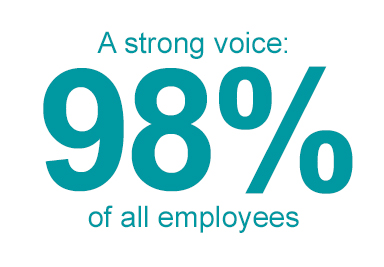
In order to help solve this situation, AmCham initiated the creation of a large coalition of employer unions, chambers of commerce and other business associations who support the “Rule of Law” initiative. Apart from AmCham, the Rule of Law initiative is supported by 13 additional organizations, jointly accounting for 98% of all Slovak employers and their employees.
Their objective is to turn Slovakia into a country where taking a bribe is no longer a matter of course or an act of heroism; where the judiciary is no longer a hurdle, but rather the guardian of the cleanliness of the business environment; and where laws are adopted through a process of constructive and professional dialogue.